
How China’s Ethnic Unity Law Was Actually Written
Milk tea, naan, and a handwritten letter. Studying the reasons behind the law, and the process of its development, shows the abiding dishonesty of China's critics.

China’s Law on Promoting Ethnic Unity and Progress passed on the 12th of March 2026, and took effect on the first of July. Between the official Chinese text and a workable English translation, it is not difficult to understand the intended goals and outcomes of the law. It places the goal of ethnic unity under the purview of the Communist Party, assumes “forging a strong sense of community for the Chinese nation” as its central organizing principle, and dispenses duties to schools, government bodies, enterprises, Chinese media, internet platforms, religious bodies, social organizations, neighbourhoods, and families.
Naturally, the Western narrative surrounding the law has characterized it as a top-down programme of forced assimilation. Yet the record of how it was written tells a much different story: 28 months of research, public comment, local consultation, and proposals from China’s various ethnic communities, many of which were folded into the final statute. To understand why China would undertake such a project (and why its Western critics reacted with such opprobrium), it’s necessary to understand how ethnic and regional fragmentation has historically functioned as a weak point for formerly colonized states.
When the Congo declared independence from Belgium in 1960, it was only a matter of days before it found out the true cost of sovereignty, when a militarily weak and money-poor country possesses a wealth of resources and labour that powerful countries covet. Katanga, its richest province, announced its secession almost immediately. There were, of course, Congolese politicians clamoring for independence, as well as moneyed Congolese interests backing them, but the secession was not driven purely by internal interests.
In 2001, a Belgian parliamentary commission examined the details of Patrice Lumumba’s assassination, and among many damning findings (including deliberate encouragements from Foreign Minister Pierre Wigny to foment a coup), the commission concluded that Katanga’s secession would have been impossible without the financial backing of mining conglomerate Union Minière, which paid taxes not to Léopoldville but Katanga itself. This action not only starved the Congolese government of the country’s own revenue, but established Katanga as an alternative regional power (one, of course, more compliant with Europe’s postcolonial strategy), and exacerbated regional tensions within the fledgling state. Less than a year later, Congolese Army Chief of Staff Joseph-Désiré Mobutu (later named Mobutu Sese Seko) had snuffed out the fledgling government in a coup, and Congolese prime minister Patrice Lumumba was dead. Rather ironically, Lumumba, (and all hope for true Congolese independence from European exploitation), met his end in Katanga.
The commission wrote in clear language what the money was used for. Belgian support for Katanga, it found, aimed “not so much at secession itself” as at a confederal reorganization of the Congo. The purpose of denying tax payments to Léopoldville was to strip the economic base of power away from Lumumba and his unitarian movement. On the territory of its concessions, Union Minière ran the schools and hospitals, the bridges and the roads, and financed military and paramilitary groups to defend its interests against Lumumba’s supporters.
Meanwhile, the Belgian government pushed at least 50 million francs through secret funds, of which its own parliament and auditors were aware of only 20 million, to bankroll opposition politicians, the opposition press, radio campaigns, and covert operations. The commission’s finding was that Belgium had violated the United Nations’ resolution against actions intended to jeopardize the independence of any state, by developing a policy against a democratically elected government.
The Democratic Republic of Congo, as it is now known, has never recovered.
This is how national sovereignty collapses. Foreign powers rarely need to invent grievances to destroy the political projects of their perceived enemies. All they need to do is find existing fault lines, pour money and legitimacy into one side of it, and make it as difficult as possible to achieve national consolidation. Underneath the soil of Katanga sat a wealth of copper, cobalt, and uranium. It had a network of railways directed towards conveniently placed ports, and a tax base without which independence could never truly be achieved.
For a developing state, national unity is the condition under which land, resources, schooling, taxation, and security become national rather than foreign-managed. In fact, scholarly literature on Lumumba’s murder frames the episode around the unresolved problem of Congolese sovereignty within the broader scope of the Cold War. Lumumba’s idea of Congolese sovereignty was, in essence, the politics of concrete materialism.
Unfortunately, so was Belgium’s.
China is, quite obviously, a much different story than the First Congolese Republic. But China doesn’t have the luxury of treating the exploitation of ethnic and regional division as an obsolete Cold War strategy. In fact, in a 2018 speech at the Ron Paul Institute, retired US Army Colonel Lawrence Wilkerson (formerly chief of staff to Secretary of State Colin Powell) explained why Washington might wish to retain a military position in Afghanistan, even after the supposed purpose of the war had collapsed: because a foothold in Afghanistan placed the United States military within reach of China’s western frontier. “The CIA would want to destabilize China,” he said. The obvious method would be to “foment unrest” among Uyghurs in Xinjiang, and apply pressure to Beijing “from internal places rather than external.”
The Western narrative regarding China’s Law on Promoting Ethnic Unity and Progress is better understood within this context. In the news, the law has been labeled “forced assimilation.” Campaign for Uyghurs went even further, declaring that the law “codifies genocide.” Read as a matter of state development, however, the law is an answer to the most familiar question of multi-ethnic statehood, i.e. how does any country keep ethnic, linguistic, and regional differences from crystallizing into rival, factionalist sovereignties?
The manner in which the law was developed and enacted is one which most nationalists in multi-ethnic states anywhere in the world would have a difficult time arguing against. That is: the formation of a common language, a common national story, common development, interethnic relations based on shared community at a grassroots level, and a state well-developed enough to make citizenship a stronger sociopolitical bond than ethnicity.
In other words, one of the most normal things a state could hope to accomplish.
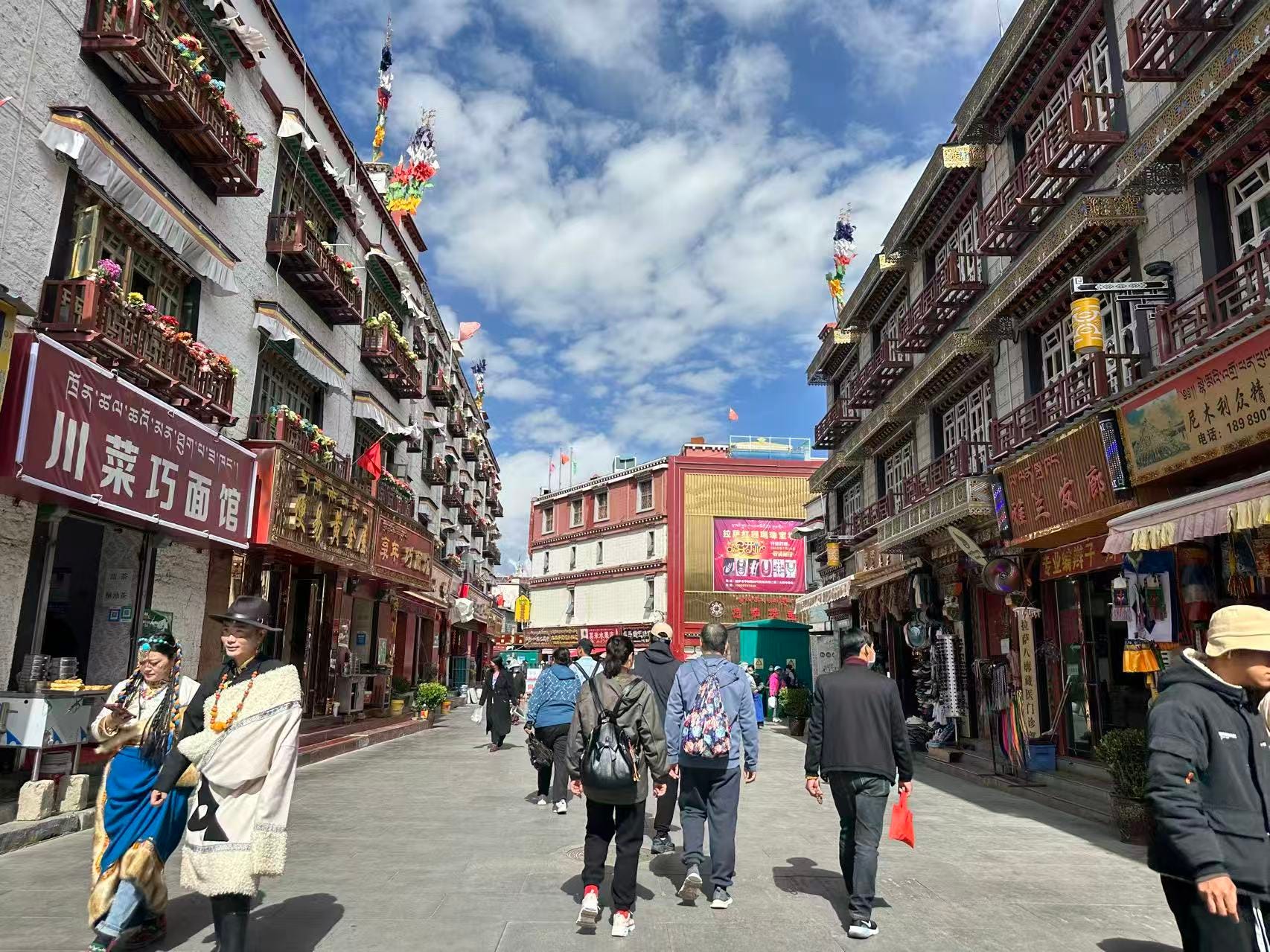
China’s Ethnic Unity Law is the legal form of a long nation-building project, and a matter that has faced China since the end of the Qing dynasty: how to bring a vast, ancient, and multiethnic inheritance to the forefront of the modern world without having it broken apart under the forces of internal stresses. This is a matter that even manages to confound Western nations, especially considering their addiction to cheap goods, cheap labour, and profit at the expense of all else. A multiethnic state can (and must) respect cultural differences, but at the same time that racialized, religious, and ethnochauvinist conflicts threaten to tear apart the social fabric within the so-called “developed” world, it’s time to admit a harsh truth: a country cannot build equal citizenship if ethnicity within communities, nations, and states remain the first and most vital unit of political identity.
How is the matter of ethnicity sorted? Once one imagines their own body politic outside of the family, endogamy and local community, the strongest bonds tend to be linguistic, cultural, and religious. In Western countries, the approach over the past 40 years has tended towards multiculturalism, which recognizes the value of each, but whose “mosaic” approach has inadvertently created communities cabined off from one another, and often tends towards groups dragging old grudges and conflicts to the new countries into which they’ve immigrated and settled down. This ultimately complicates the matters of language, schooling, territory, history, and representation, thereby making it much more difficult to define, much less achieve equality. Once the state busies itself managing tensions and even outright animosities between groups (especially given the instability of the global economy), rather than managing the broader well-being of citizens within the state, every government action, policy agenda, and election campaign risks spiraling into ethnic hostility.
Despite the term “nationalism” having been historically claimed by the right wing, a strong national identity is not antagonistic to ethnic equality. In fact, the development of a national-popular collective will (Gramsci’s nazionale-popolare) is a key component to socialist thought, having undergone over a century of practical trial-and-error. What gets under the skin of the Western commentariat about China’s Ethnic Unity Law is far from the matter of “genocide,” which it tolerates in real, tangible, and horrific fashion from its partners such as Israel. What bothers them so much is the possibility that China can actually answer the question of ethnic plurality in a way that creates not only equality, but dignity and the long-term achievement of that national-popular collective will.
What the law says about language, equality and development
As Lei Jianbin (deputy director of the National People’s Congress Standing Committee’s Legislative Affairs Commission) pointed out when the law took effect, more than 100 sovereign states name a common, official, or national language in their constitutions. For example, France’s constitution states that the language of the Republic is French. In this regard, China sits comfortably alongside countries such as Austria, Poland, Hungary, Portugal, and Sweden, which recognize the existence of ethnic and linguistic plurality within their borders, but designate a single official language. Contrary to the criticisms of anti-China activists abroad, the law does not forbid Tibetan, Uyghur, Mongolian, Kazakh, or Zhuang languages to be spoken in the country. In fact, Article 29 requires the state to encourage all ethnic groups to learn one another’s languages.
One of the more contentious sections of the law, in Western news, is Article 15. According to this section, the state is tasked to promote the national common spoken and written language (普通话 or Putonghua, usually referred to as “Mandarin” by English-speakers) across the board. Schools are to use the common tongue as the basic language of instruction; the Chinese bureaucracy is to use it as the official language; and where state organs, social groups, enterprises, public institutions and other social organizations need to use the common language alongside a minority language, the common language goes first and is given prominence. Article 15 also adds “The state respects and protects the learning and use of minority languages, supports the standardization and digitization of minority languages and scripts, and supports the protection, collation, research, and utilization of ancient books of minority groups.”
(国家尊重和保障少数民族语言文字的学习和使用,推动少数民族语言文字的规范化、标准化和信息化建设,支持少数民族古籍的保护、整理、研究和利用.)
To place material support behind the rhetoric, the law also provides for regional support and paired assistance. It calls for the provision of transportation, energy, water, information, and logistics infrastructure to ethnic regions. It incorporates the development of agriculture, textiles, traditional medicine, local industry, and tourism, as well as improved education, healthcare resources, and equitable employment. Article 5 prohibits discrimination against or oppression of any ethnicity outright, and Article 59 supplies the enforcement, directing county-level departments and above to order corrections where any organization or individual engages in employment discrimination, refuses to provide goods or services, or otherwise discriminates on the basis of ethnic identity. In other words, the Ethnic Unity Law recognizes that improved living conditions for minority groups are key to the development of national unity, rather than (as the critics would have others believe) simply expecting national consciousness to arrive by decree, and without the necessary infrastructure and protections.
The process of the law’s development
We are conditioned in liberal legal systems to think of the law as a check against state power. In China, the law has historically performed an additional function. That is, translating national objectives into granular institutional and individual responsibilities. In fact, the law codifies a policy agenda that Chinese scholars and officials have been working out for more than a decade.
In 2011 Hu Angang and Hu Lianhe argued that China should depart from its existing (Soviet-influenced) model, which built up separate ethnic nationalities, and move toward a stronger common national identity. In a rather radical departure from the previous status quo, Hu and Hu called for a number of drastic solutions, including:
Removing ethnic markers from identification documents, school admissions, and employment
Dropping the word “nationality” for the 56 groups in favour of “ethnic group”
Replacing ethnicity-based preferential policies with policies aimed at poverty instead
Promoting interethnic marriage and Singapore-style residential mixing
Merging Han and minority schools into mixed classrooms
Redrawing the provinces and phasing out prefecture-level administration entirely
Subordinating religious identity to national identity.
Most contentiously of all, they argued that no ethnic group should be permitted to claim representation of the interests, resource rights, or governance rights of any particular territory.
However, the critical view of Hu and Hu’s position was that it over-emphasized national unity from the Han viewpoint, and was too brash in dispensing with pluralism. It also gave short shrift to the existing structural disadvantages in education and unemployment among ethnic minorities, and in autonomous regions.
Peking University sociologist Ma Rong published a sharply critical response in 2013, arguing in favour of “pluralistic unity” (the framework proposed by Fei Xiaotong in 1989), under which “one body” and “diversity” are dialectically inseparable, and under which neither should be neglected. Ma highlighted that Mao and Lenin explicitly opposed ethnic chauvinism as violating communist principles, and pointed to the role of minority intellectuals, cadres, religious figures, community leaders and entrepreneurs in the development of modern-day China.
Citing the 2010 census, Ma noted that Uyghurs and Tibetans occupied a clearly disadvantaged position in terms of educational and occupational stratification, and that their disadvantages had worsened over the preceding decade. He argued that Han political and cultural elites, whether they admitted it publicly or not, retained an unconscious bias, and called that mindset the main obstacle to China’s advance to a new stage of political civilization. Ma concluded by arguing that sweeping adjustments to China’s fundamental institutions must never be launched rashly, and must proceed only where social consensus already exists and most minority citizens themselves support it.
Pan Hongxiang and Chen Shuangjiao’s 2024 article illustrated the political and legal importance of prioritizing national unity, but argued for a consolidated and specific legislative mandate that complements regional and local ethnic laws (many of which academic critics had noted as outdated, redundant, difficult to enforce, and no longer reflective of local conditions). They also argued that, in a balance of interests, the existing Regional Ethnic Autonomy Law leans towards autonomy, and an Ethnic Unity Law should lean towards unity. They also classified the proposed Ethnic Unity Law as promotion-oriented legislation, a category which by definition carries relatively more provisions meant to encourage, and relatively fewer provisions deemed mandatory.
The most sweeping proposals for national unity legislation (which could have potentially damaged ethnic relations), did not become law. In fact, much the opposite: Article 8, for example, upholds and improves the system of regional ethnic autonomy. The 56 nationalities remain, as does ethnic identification. The Ethnic Unity Law ultimately rejects Hu and Hu’s most draconian proposals, while maintaining the goal of national integration. It is certainly not the program they proposed in 2011.
To that effect (and despite foreign commentary which characterized the Ethnic Unity Law as a top-down mandate that violated the rights and identities of minorities), the development of the legislation solicited the extensive involvement of minority groups. In fact, the development of the law was conducted in a fashion far more participatory than anything reported in Western outlets.
It began with legislative research trips to 15 provinces, autonomous regions, and municipalities, led personally by four vice-chairpersons of the National People’s Congress Standing Committee. More than 380 government, institutional, and provincial-level units were canvassed twice. Nearly 50,000 contributions were recorded during two month-long rounds of public comment. The law’s authors reviewed more than 1400 policy documents and laws, commissioned 19 specialist research projects, and collected and studied the legislation and implementation records of 46 other countries in the field of ethnic affairs. All of this, during the 28 months between the time the law began its drafting (November 2023) and the time of its passing (March 2026).
The National People’s Congress includes 442 minority deputies (14.85% of the total membership), in accordance with the Chinese electoral law which guarantees that every officially recognized minority, however small, be represented by at least one NPC deputy. Drafts of the law were translated into Mongolian, Tibetan, Uyghur, Kazakh, Korean, Yi, and Zhuang for those deputies to use during deliberation. The legislative leading group was headed by NPC Standing Committee vice-chairperson Li Hongzhong, with three further vice-chairpersons serving as his deputies: Peng Qinghua, Losang Jamcan (who is of Tibetan descent), and Shohrat Zakir (who is of Uyghur descent). NPC Ethnic Affairs Committee chair Bayin Chaolu (of Mongolian descent) noted that since the beginning of the new era, NPC deputies had put forward motions and suggestions calling for such a law on 700 separate occasions.
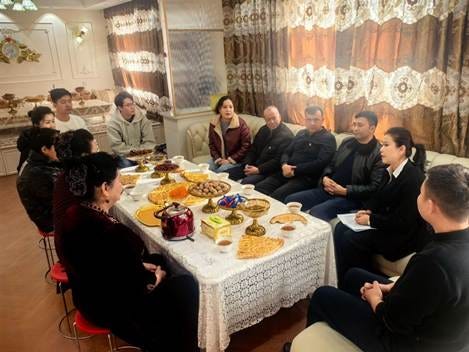
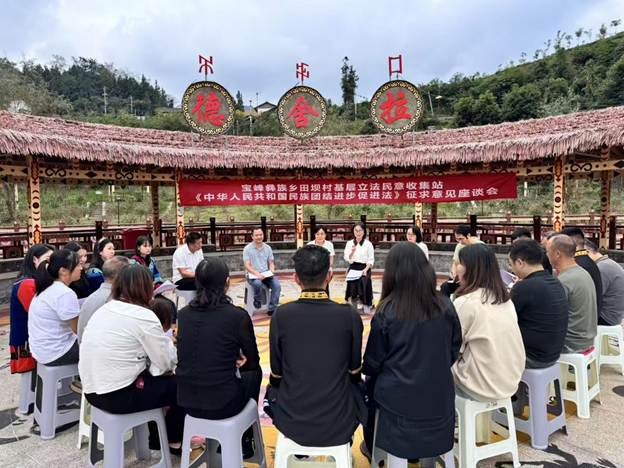
Official accounts of the drafting process provide a multitude of examples in which local proposals were reportedly folded into the final statute. In practice, consultations for the Ethnic Unity Law (and addressing the ethnic disparities standing in the way of national unity) looked something like this: In October 2025, in Sichuan’s Baofeng Yi Ethnic Township, Yi residents, township deputies, and village officials discussed the draft in a meeting held on the “Deshela” square (“Deshela” meaning “welcome” in the Yi language). Participants suggested that ethnic unity education begin with children. They also suggested that the state do more to support the distinctive industries of minority regions (such as tea and tourism), and that traditional villages and crafts be protected.
The county people’s congress compiled these into a proposed revision of Article 16, requiring schools to use the national unified textbooks and to incorporate Chinese national community consciousness into primary, secondary, and tertiary curricula. Today, the wording of Article 16 hews close to the first of these suggestions. For Sun Shiping, the grassroots legislative information collector who was the meeting’s note-taker, it was the second time the suggestions of her neighbours had been written into national law.
The NPC Standing Committee’s Legislative Affairs Commission has established 60 grassroots legislative contact points (基层立法联系点) since 2015. The purpose of these contact points is to establish a direct line of communication between communities and the national legislature, bypassing the filters that normally exist in municipal and provincial layers of government. 16 of them were established in ethnic regions along China’s borders. Between July 2015 and April 2026, those contact points returned more than 77,000 opinions across 224 rounds of consultation on draft laws, legislative plans, and regulatory review. Of that total nearly 11,000 opinions were returned from the border ethnic regions.
Ya’an, designated as a contact point in 2021, held seven sessions on the law’s drafting. Officials went door to door in Ya’an’s Xiexie Tibetan Township to canvass Tibetan residents and grassroots cadres. They commissioned county-level points in Yingjing, Baoxing, and Hanyuan to collect opinions from Yi and Tibetan communities, and sat down with law faculty and minority students at Sichuan Agricultural University.
Of the 23 recommendations submitted from Ya’an, 3 were accepted. One came from Wang Jiankang, a Shimian County deputy and a Tibetan raised in Xiexie. Wang, who could never forget the Muya Ersu songs sung by old folks, and the “handicraft skills in their fingertips,” asked that traditional villages and intangible cultural heritage be sought out, protected, and put to good use.
Another was the provision that provinces, autonomous regions, and municipalities may draw up their own measures for implementing the law, rather than having such measures dictated from the central government. In the finished statute, Article 64 does in fact authorize the people’s congresses of provinces, autonomous regions, directly governed municipalities, districted cities, and autonomous prefectures to make local regulations appropriate to their circumstances.
Over the duration of its role as a grassroots legislative contact point, Ya’an has so far completed opinion collection on 32 draft laws and submitted 802 suggestions, of which 91 have been adopted.
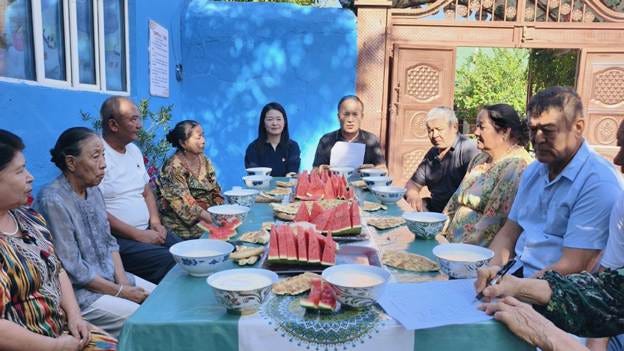
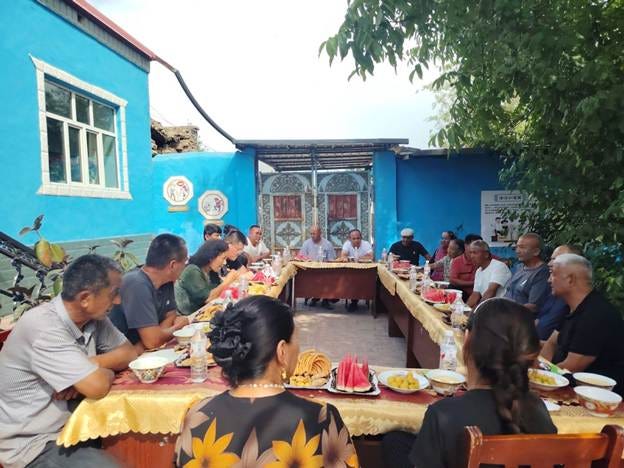
In Xinjiang, numerous public consultations were held throughout the region. In Shanghudiyayuzi Village in Yining County, villagers gather once a month under a mulberry tree for what they call a “milk tea council.” At these events, attendees drink milk tea and eat naan together, while mulling over whatever matters of importance are on their minds. During the draft consultation, they proposed that the village’s volunteer service teams (formed in 2021 to look after left-behind children and elderly residents, take villagers to their medical checkups, and maintain public sanitation) be promoted and popularized. That suggestion, from a village at the foot of the Tianshan, became Article 28 of the finished law. It requires all levels of people’s government to encourage and support volunteers (and volunteer service organizations) in promoting exchange, cooperation, and mutual assistance among all ethnic groups.
To hear Tibetan separatists in the west tell the story (in English, of course), ethnic unity legislation is drafted in China for the purpose of forcible assimilation. However, China’s first legislation specifically dedicated to ethnic unity didn’t even come from Beijing. In 2010, the Diqing Tibetan Autonomous Prefecture (with the support and supervision of the Yunnan provincial people’s congress) issued the Regulations on Ethnic Unity and Progress of Diqing Tibetan Autonomous Prefecture. It was the first regulation in China to be drafted for the specific purpose of ethnic unity, and the first to turn “all ethnic groups are equal” and “safeguard ethnic unity” into concrete provisions with rights and responsibilities attached.
Guizhou and Xinjiang then followed the Diqing model to draft their own provincial-level regulations on ethnic unity and progress. In 2018, Yunnan passed the first regulation anywhere in China to write “Forging a strong sense of community for the Chinese nation” (铸牢中华民族共同体意识) into law. By the time the national Ethnic Unity Law was passed in 2026, more than 20 provinces had produced their own regulations of the same kind.
In 2022 the Yunnan delegation submitted the motion proposing that the National People’s Congress make the Ethnic Unity Law, and during the first and second readings the Yunnan provincial people’s congress submitted 28 opinions, most of which were adopted. These included the expansion of responsibility for ethnic unity beyond the individual level to state organs, armed forces, political parties, social organizations, and enterprises (which was incorporated into the Unity Law’s preamble), as well as provisions around the display of shared Chinese cultural symbols in public facilities (which was ultimately reflected in Article 14).
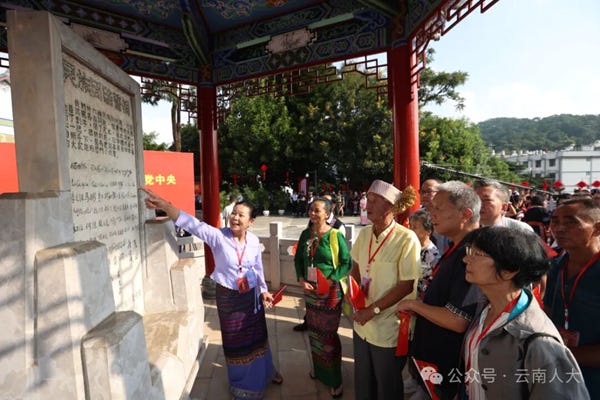
Article 64 was also developed from sources on the ground. For example, in Yunnan, two first-year law students from Yunnan University (Zhou Shijie of Dali, and Liu Zhibo of Inner Mongolia) visited the Pu’er Ethnic Unity Oath Monument in Ning’er Hani and Yi Autonomous County (宁洱哈尼族彝族自治县) during their field research in the summer of 2025. The monument, a weathered stele, was erected after 48 representatives from 26 ethnic groups (along with local party, government, and military leaders) gathered with a crowd of locals on New Year’s Day of 1951. At the event, the 48 representatives followed the Wa custom of spearing a bull and drinking consecrated water, before signing their names in Chinese, Dai, and Lahu scripts to an oath of unity. The oath itself, along with their signatures, was engraved on the stele. Zhou and Liu found that the county had passed a regulation to protect the oath monument, and keep its history alive. From this, they came to a conclusion: if a county could draft a law to honour and protect its history, then couldn’t national legislation guarantee that power for others? The students mailed a handwritten letter to the Legislative Affairs Commission, suggesting that the new law should recognize the right of autonomous areas to draft regulations according to local conditions. Article 64 extended the suggested legislative authority to provinces, municipalities, and districted cities as well.
Article 53 directs local governments to handle and resolve disputes according to law, towards the purpose of safeguarding ethnic unity. In Yi communities, for example, degu serve as customary mediators. In Mabian Yi Autonomous County, NPC deputy Qiao Jinshuangmei and the county court jointly established the “Shuangmei Mediation Room” on a “people’s congress plus judiciary plus degu plus village notables” model (调解室”人大+司法+德古+乡贤”的模式). A degu begins with moda dialogue (莫达对话), which brings the clans’ representatives together, to settle the atmosphere. Mamu jiwei (玛牧·吉威), or the principle that “law” and “virtue” are equally weighted aspects of jurisprudence, is used to work out the rights and wrongs. Finally, national law is brought in last to explain the ruling.
Since the Mediation Room began operations in 2023, it has resolved 1028 disputes, with a success rate of 95.15 percent.
In Liangshan, 300 kilometers away, the prefecture’s Degu Mediation Association resolved a case just before Spring Festival, in which an electric power project was found to be deeply in arrears to its Yi labourers. The association assembled a special mediation group, and spent two days and a night on site. In that time, they argued through the binding provisions of the Regulations on Guaranteeing Migrant Workers’ Wage Payment and settled tempers with erbi, or Yi proverbs. As a result, they recovered more than 2.7 million yuan in unpaid wages, and the workers went home for the holiday with their earnings in hand.
The language argument, and development as equality
The process of developing the law (and the historical context behind its necessity) has, largely, been lost on Western critics. Rather than expend the slightest effort looking into the development of this law and the sociopolitical issues it seeks to resolve, Western politicians and news organizations instead take the word of bad faith advocates and anti-Chinese protesters.
But who exactly are these advocates? Who signs their cheques? The World Uyghur Congress has received funding from the National Endowment for Democracy since 2006. The NED, funded by the US Congress, stated in 2020 that it had awarded over $8.7 million to Uyghur groups from 2004-2020, and described itself as “the only institutional funder” of Uyghur advocacy and human rights work. The Uyghur Human Rights Project was itself founded through an NED grant. Its executive director, Omer Kanat, is a co-founder of the World Uyghur Congress and longtime chair of its executive committee. In the decade prior, he served as senior editor of Radio Free Asia’s Uyghur Service.
In 2020, the Central Tibetan Administration announced USAID had awarded it nearly $1 million in funding. Its Sikyong called the award a historic milestone which “fulfills a long desired aspiration,” and said he hoped it would “pave the way for a more substantial funding relationship.” Congress approved $17 million in total Tibet-related funding for 2019 alone, of which 3 million was earmarked to strengthen the capacity of Tibetan institutions and governance in exile. Radio Free Asia’s Tibetan service was later granted over $4 million in annual funding from Congress, and Voice of America’s more than $3.3 million.
When USAID was disrupted by the Trump administration’s “DOGE” project in 2025, the CTA claimed it stood to lose somewhere between 40 and 50 percent of its budget. In July, the US Department of State (to which the USAID portfolio was tranferred, under the purview of Marco Rubio) reinstated $6.8 million in funding.
In other words, the Western account of Chinese ethnic policy is produced, in large part, by organizations that are funded by a government that considers China a strategic adversary. In the opinion of these critics, the promotion of the Chinese common tongue is itself a sinister development. Yet again, the criticism tends to originate from multiethnic countries which not only have an official language (in Canada’s case, two official languages where one is so vigorously policed that entrepreneurs worry it could drive them out of business) but contain populations mere fractions the size of China’s.
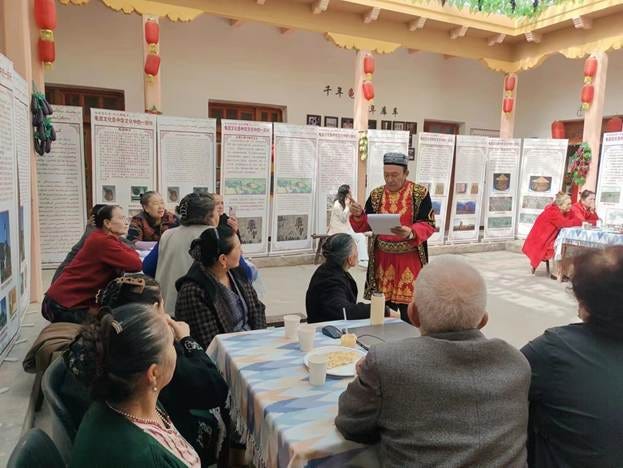
A country of 1.4 billion people cannot reasonably run schools, courts, hospitals, railways, universities, national exams, and a modern labour market without a standard language. This is especially true at a time when China is undertaking large-scale reform of the hukou system to improve citizens’ ability to migrate within the country, and to access public services and social benefits where they live (rather than based on their registered hometown). Without the ability to communicate fluently in the most widely spoken language, migrants face fewer opportunities for employment, access to education is more difficult, and health inequalities increase. These problems are by no means unique to China, they exist everywhere (and especially within the countries where the most vociferous critics of the Ethnic Unity Law themselves live).
Attempts at resolving similar ethnic and linguistic tensions elsewhere in the world have had mixed results. In many cases, language accommodation fails to settle the questions of constitutional status, sovereignty, and fiscal power. For example, Spain’s constitution makes Castilian the official language of the state while permitting other languages to hold co-official status in their autonomous communities. Even with such a concession, the recognition of Catalan did not quell separatism. In fact, the failure to resolve the deepening contradictions (as well as the Spanish Constitutional Court’s 2010 curtailment of the 2006 Catalan Statute of Autonomy) led to the 2017 Catalonia crisis, one of the deepest constitutional crises in modern Europe. The enshrining of language rights in Spain’s constitution failed to settle the matter of sovereignty so spectacularly that emergency measures (and police crackdowns) had to be taken to stop an all-out secession from happening.
Scale up the issue to a country the size of India, and an even more difficult history presents itself. Its Constitution’s Eighth Schedule recognizes 22 languages, and its postcolonial settlement has attempted to balance Hindi, English, linguistic states, and regional autonomy for decades. Jyotirindra Das Gupta’s study of Indian language politics makes the point that, in a developing democracy, language policy is inseparable from the process of state formation, and Wilfried Swenden describes the Indian arrangement as an “unstable equilibrium.” In Punjab, for example, the creation of a Punjabi-speaking state settled the territorial and linguistic demands, but not the larger conflict over Sikh political identity, regional development, and the division of power between the state and New Delhi. These grievances, combined with central interference and political violence, set the province down the path towards naked violence. This chain of events culminated in Operation Blue Star, Indira Gandhi’s assassination, anti-Sikh massacres, and years of insurgency and counterinsurgency.
The Western case against the Ethnic Unity Law asks us to believe that the concept of national integration is a laudable goal when Western countries do it, and cultural brainwashing when China attempts a similar ideal outcome by different means. Minority languages and cultures need more than community sentiment to remain alive. They require children in classrooms, teachers, and digital tools. They require preservation through books, artifacts, institutional custodianship, and good faith exchange with the dominant culture. But that reality is in fact addressed by the letter and application of the Ethnic Unity Law, and done so with the ongoing consultation of China’s many ethnic minority communities.
The right standard by which to judge this project isn’t whether China looks like liberal multiculturalism. That approach, used in countries such as Canada and the UK alongside the profit-driven motives of neoliberal austerity, has produced catastrophic outcomes. By leaving new immigrants such as refugees, foreign students, and seasonal workers exposed to the predatory excesses of private capital, the end result has been stagnant wages, high rents, housing shortages, spiraling inflation, and financial precarity. Liberal multiculturalism without material well-being and national consciousness in mind has, in many cases, produced the opposite of unity: deepening economic inequalities, racial resentments, and significant damage to employment and housing markets.
In reality, the true standard for multiethnic nations is whether such a law advances equality in citizenship, national development, interethnic solidarity, and national security without diminishing the lives and traditions of minority cultures. The process of developing the Ethnic Unity Law not only took all of these factors into consideration, but went to lengths to give ethnic minorities direct voices and direct stakes in the outcome.
As such, the law should be judged by what it builds over the long term. Whether, for example, minority citizens gain better access to schools, healthcare, employment, infrastructure, and national institutions. Whether their languages and traditions remain living parts of broader Chinese society. Whether the bonds of Chinese identity can coexist with ethnic inheritance. That appears to be the ultimate purpose behind the Ethnic Unity Law, and perhaps even an example to other nations: proof that in a large, multiethnic country there is no need to choose between community identity and shared national pride.